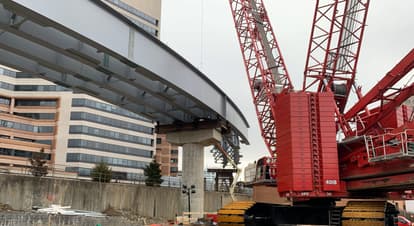
HSE provides certified field execution for bridge steel erection projects involving complex girder systems, staged construction, crane coordination, access constraints, and schedule-sensitive installation requirements. Our crews understand the importance of safe, efficient erection sequencing and close coordination with the general contractor, engineer, fabricator, owner, and inspection team. Whether supporting new bridge construction, replacement structures, or phased transportation work, HSE brings the field experience needed to help keep critical bridge projects moving safely and on schedule.
Bridge Steel Rehabilitation
HSE supports bridge steel rehabilitation projects that require experienced field crews, repair planning, retrofit coordination, and careful execution in active or constrained environments. This work may include repairing damaged or deteriorated steel members, assisting with retrofit installations, removing and replacing select components, and coordinating work around traffic, access, and schedule restrictions. HSE’s role is focused on steel repair and rehabilitation, helping project teams extend the service life of bridge structures while maintaining safe and controlled field operations.
Heat Straightening
HSE provides heat straightening support for damaged steel bridge members where repair may be a viable alternative to full replacement. This process can be used to address impact-damaged girders, beams, and other steel components when approved by the project engineer and applicable governing requirements. HSE can assist with field evaluation, repair planning, access coordination, and execution of the heat straightening work, helping owners and contractors restore damaged steel members while potentially reducing replacement costs, lead times, and disruption to the project schedule.
Emergency Bridge Steel Repair
HSE supports emergency bridge steel repair needs when damaged steel members require rapid review, planning, and field response. These situations may involve vehicle impacts, over-height load strikes, damaged girders, compromised beams, or other urgent structural steel concerns. HSE can help project teams evaluate the field condition, coordinate repair or replacement options, mobilize experienced crews, and execute steel repair work in a controlled and schedule-conscious manner. The goal is to help restore safety, support traffic or access needs, and reduce downtime where possible.
Girder Repair/Replacement Support
HSE provides field support for bridge girder repair and replacement work, including damaged member removal, replacement girder installation, retrofit support, crane coordination, and heavy rigging planning. This work often requires detailed sequencing, tight coordination with closures or traffic control windows, and close communication with the engineer, contractor, fabricator, and owner. HSE’s field crews are experienced in handling large bridge steel components and can support both planned replacement work and repair-driven replacement needs.
MOT-Sensitive Work
HSE understands the importance of maintenance-of-traffic-sensitive work on bridge and transportation projects. Many bridge steel erection, repair, rehabilitation, and replacement scopes must be completed around lane closures, traffic shifts, limited work windows, railroad or waterway restrictions, and public safety requirements. HSE supports these projects with careful planning, schedule awareness, crane and access coordination, and field execution strategies that help minimize disruption while maintaining safe operations for both the project team and the traveling public.
Heavy Rigging for Bridge Components
HSE provides heavy rigging support for bridge components that require specialized handling, lifting, removal, or installation. This may include bridge girders, steel beams, diaphragms, retrofit components, damaged members, and other heavy structural steel elements. HSE works with the project team to plan lift sequencing, crane access, pick points, site constraints, and field coordination so heavy bridge components can be moved and installed safely and efficiently. This capability is especially valuable on constrained sites, phased bridge projects, emergency repair work, and complex rehabilitation scopes.