
Projects
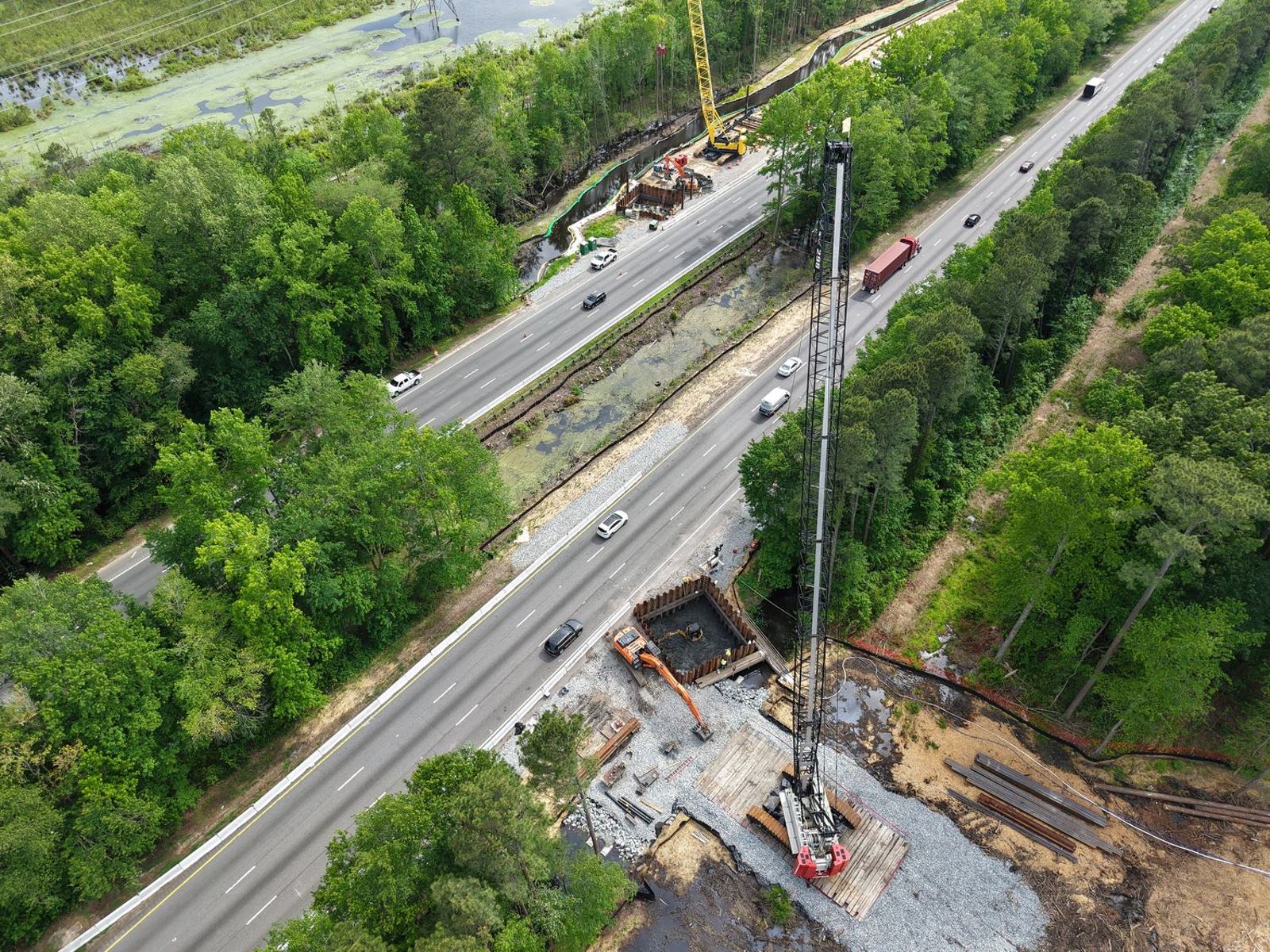
I-95 Christina River Bridge, Wilmington, Delaware, bridge steel erection by High Structural Erectors.
Watch the full videoBridge Steel & Precast Erection Across the Mid-Atlantic
Highway and rail bridges, interchanges and flyovers, precast parking structures and university buildings from New York to Virginia. Browse a selection of the projects High Structural Erectors has erected, repaired and replaced.
Projects
Filter Projects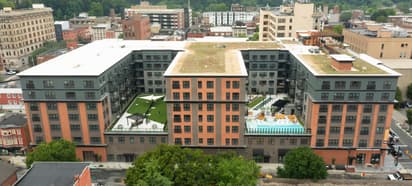
Marquis Parking Garage
High Structural Erectors erected the precast structure at the Marquis in Easton, Pennsylvania, a 308-space parking deck built beneath 264 apartments and first-floor retail, within a 400,000-square-foot mixed-use development.
A garage carrying occupied floors above it is a different job from a standalone deck. The precast has to be set to the tolerances the residential structure above will be built to, and the erection sequence has to clear the way for the trades following immediately behind it.
The precast also carries the building’s face. Thin brick was cast into the panels at the plant to match the apartment façade above, so the two-story base reads as part of the building rather than as a garage underneath it, a finish that arrives with the panel instead of being applied in the field afterward. At street level, fire-rated precast separates the commercial spaces from the parking above.
High Concrete Group produced the 50,225-square-foot precast package. The project took a 2026 PCI Design Award Honorable Mention for an all-precast concrete parking structure.
Route 22/322 Bridge over I-81
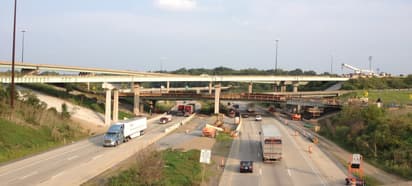
When the Route 22/322 bridge over I-81 near Harrisburg was damaged on May 9, 2013, PennDOT needed the structure replaced, not repaired, and needed it back in service fast.
High Steel Structures was awarded the fabrication contract on May 23, two weeks after the incident, and High’s field operations group, the crew that became High Structural Erectors in 2013, took the subcontract to erect the steel. The crew set 30 I-girders and two box girders, 365 tons in all, beginning August 12 and finishing August 26, fourteen days of erection over a live interstate.
From notice to proceed through completed steel erection, the entire replacement took 95 calendar days.
Emergency work rewards contractors who can compress the front end of a project rather than just the field portion. Shop capacity, engineering, rigging plans and crews all had to move in parallel with a design that was still being finalized. Having the fabricator and the erector inside the same organization removed a set of handoffs that an emergency schedule cannot absorb.
G.A. & F.C. Wagman was the general contractor.
Jim Thorpe Memorial Bridge
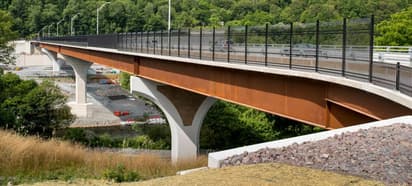
High Structural Erectors erected the steel for the Jim Thorpe Memorial Bridge, carrying Route 903 over the Lehigh River in Carbon County, Pennsylvania. The PennDOT project was completed in 2017 with Allan Myers as general contractor. High Steel Structures fabricated the 2,199 tons of weathering steel plate girders.
The site allowed very little room to work. Steep slopes, the river itself, and active railroad tracks beneath the bridge limited where cranes could be placed, and historic canal locks discovered in the river during construction ruled out conventional falsework in the channel.
Working with the design consultant, HSE developed an erection plan that eliminated shoring towers altogether. Many of the girders were instead erected in pairs, braced together and lifted as a single unit, so each pair was stable the moment it was set. Six different cranes were used over the course of the work, and the heaviest picks required three cranes working simultaneously.
The result was a bridge erected without towers in the river, without disruption to the railroad below, and without compromise to the historic structures found in the channel.
I-95 Rappahannock River Bridges
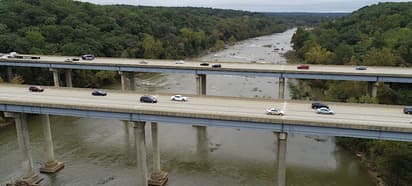
High Structural Erectors was the steel erector for the twin I-95 mainline bridges over the Rappahannock River near Fredericksburg, Virginia, a stretch of interstate that carries traffic between Richmond and northern Virginia and cannot simply be closed.
The Virginia Department of Transportation replaced the southbound and northbound structures in sequence, each a 1,200-foot weathering steel plate girder bridge. High Steel Structures fabricated 5,125 tons of girders across the two projects, and High Structural Erectors set them. Southbound erection ran from 2018 into 2020; the northbound structure followed from 2020 into 2022. Wagman Heavy Civil was the general contractor.
Sequencing was the defining constraint. Girders had to arrive, be picked and be set in an order that kept the river crossing and the adjacent travel lanes working throughout, across four construction seasons and two separate structures.
Fabricated in Lancaster by High Steel Structures and set in the field by High Structural Erectors, the Rappahannock bridges show what the two companies do together: one shop, one field crew, one point of coordination from the mill order through the last girder set.
Villanova University Drosdick Hall
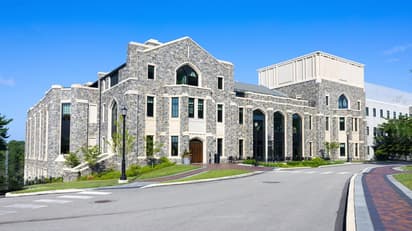
High Structural Erectors erected the architectural precast on Drosdick Hall at Villanova University, the $125 million, 150,000-square-foot expansion that added more than twenty research laboratories and a two-story innovation lab to the College of Engineering.
The panels carried thin veneer stone applied off-site, so the building meets the campus’s Collegiate Gothic character without a mason working scaffold for a season. Three joint-free chimneys, each built from four stone-clad panels with custom caps, were set as single assemblies rather than pieced together at roof level.
The precast exterior went up in eight weeks on a site with limited access and complex grading, which let the trades behind the façade start earlier than a field-built exterior would have allowed.
Drosdick Hall opened in April 2024 and earned a 2026 PCI Design Award for Higher Education / University Building.
I-95 / I-495 / I-295 Interchange
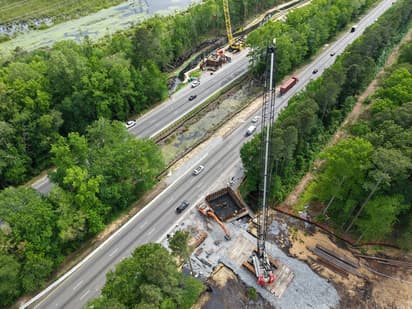
High Structural Erectors erected structural steel at the I-95 / I-495 / I-295 interchange in Prince George’s County, Maryland, a major Capital Beltway junction where erection had to be sequenced around continuous heavy traffic on three interstates.
I-495 Capital Beltway HOT Lanes
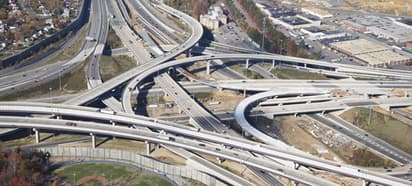
High Structural Erectors erected structural steel on the I-495 Capital Beltway HOT Lanes program in Northern Virginia, bridge steel set over one of the most heavily traveled interstates in the country, with every lift sequenced around live Beltway traffic.
The express-lanes program rebuilt the Beltway corridor in Fairfax County while it stayed open. Bridges and overpasses along the alignment were replaced or widened to carry the new lanes, which meant a long series of short, precisely scheduled outages rather than one extended shutdown: steel delivered to a specific hour, set inside a defined window, and traffic restored before the morning peak.
Work of that kind is decided before anyone leaves the yard. The pick plan, the crane setup, the delivery order and the contingency for a lift that does not go as drawn all get engineered in advance, because a Beltway closure that overruns is measured in miles of backup.
Dulles Corridor Metrorail
High Structural Erectors erected structural steel on the Dulles Corridor Metrorail project in Northern Virginia, the extension of the Washington Metro Silver Line through Tysons toward Dulles International Airport.
The corridor is one of the most heavily developed in the Washington region, and the alignment runs through it rather than around it: elevated structure threading the Route 7 and Route 123 corridors in Tysons, alongside active roadways, live utilities and other trades working the same footprint.
That geometry decides how steel gets set. Crane positions, delivery windows and pick sequences were planned against traffic and against the other contractors on site, with lay-down space measured in feet rather than acres. Erection engineering gets done up front on a job like this, because there is no room to improvise it in the field.
The Silver Line was delivered by the Metropolitan Washington Airports Authority and is operated by WMATA.
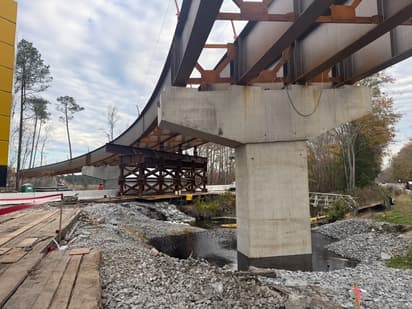
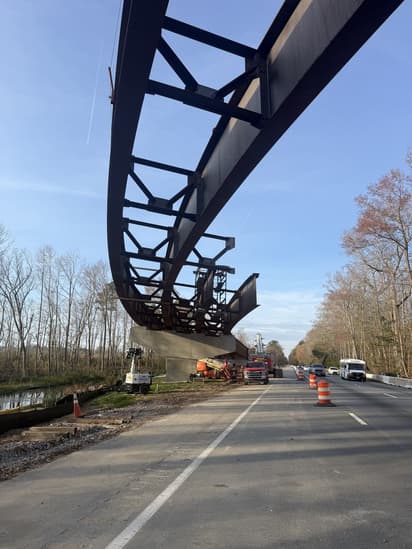
Route 13/58/460 Flyover
High Structural Erectors was the erection contractor on the new Route 13/58/460 flyover in Suffolk, Virginia, erecting the structural steel for the span alongside general contractor Crowder Construction for the Southeastern Public Service Authority, the Virginia Department of Transportation and HDR.
The flyover exists to remove a hazard. Trucks entering the SPSA Regional Landfill had to cross the median of a divided primary route at grade, a conflict point that mixed loaded refuse haulers with highway-speed through traffic. The new ramp carries eastbound landfill traffic over the highway on its own structure and eliminates the crossover entirely.
For the erection crew, the job was steel set over a route that stayed open. Lifts were planned around traffic on Route 13/58/460 below, with the sequence built to keep the highway moving and the closures short.
The flyover is part of VDOT’s $30.01 million SPSA Interchange Improvements Project, scheduled for completion in fall 2026.
Commercial Plant Beam Strike Repair
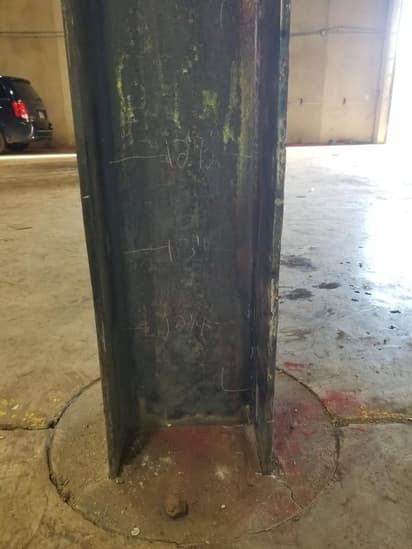
A forklift operator struck a structural steel beam inside an operating commercial printing plant in Lancaster County, Pennsylvania. Plant management called HSE in to assess the damage.
HSE’s heat straightening team evaluated the struck member on site, established how far it had moved and whether the load path was compromised, and produced a heat straightening plan, the straighten-or-replace decision made before any steel was cut.
The beam was then heat straightened in place. Controlled heating patterns and restraint brought the member back to line without removing it, without new fabrication and without the shutdown a member replacement would have forced on the floor beneath it.
That is the ordinary case for heat straightening inside an operating facility. Replacing a struck beam means shoring, demolition, new steel, shop drawings and fabrication lead time, and a production area handed over for the duration. Straightening it in place, under a repair procedure the owner’s engineer can approve, gives the owner the structure back in a fraction of the time.
The same controlled heating method is used on bridge girders. Our bridge girder heat straightening guide covers the temperature limits, the damage categories and when the repair is not appropriate.
I-95 / I-695 Interchange, Phase 1
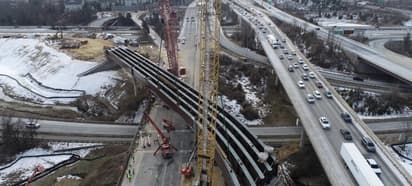
The reconstruction of the I-95 and I-695 interchange in Baltimore County was one of the largest steel erection undertakings in High’s history: eleven bridges built in seventeen construction stages for the Maryland Transportation Authority, with 16,524 tons of steel fabricated by High Steel Structures.
High’s field operations group, the crew that became High Structural Erectors in 2013, erected six of those bridges: four large multi-span curved flyover ramps and two straight plate girder structures.
Curved flyover ramps are among the most demanding steel a crew can set. The girders are unstable until the frame closes, the geometry changes continuously along the span, and every pick has to be planned against the position of the last one. The ramps here stood as high as 110 feet and were supported on shoring towers at mid-span during erection. Cranes ranging from 60 to 300 tons in capacity worked the site, all of it staged around traffic on two of the busiest interstates in Maryland.
The general contractor was a joint venture of G.A. & F.C. Wagman, Corman Construction and McLean Contracting.
Penn State Health Hershey Parking Garage
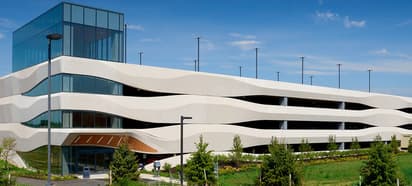
High Structural Erectors erected the 1,235-space precast concrete parking structure at Penn State Health Milton S. Hershey Medical Center in Hershey, Pennsylvania, setting double tees, spandrels, columns and wall panels in sequence with the precast supplier’s deliveries on an active medical campus.
The garage is a total-precast structure produced by High Concrete Group. Its signature is a waved spandrel that does three jobs at once: vehicle restraint, façade, and daylight diffusion into the parking levels. The design team held that look while cutting the number of unique molds from seventy-two to eight, and specified longer double-tee spans than the original layout called for, both decisions that move work out of the field and into the plant, and both of which depend on erection keeping pace with production.
Sequencing was the constraint. A working hospital campus does not stop for a garage, so deliveries, crane positions and lifts were planned around live patient, staff and emergency traffic rather than around the crew.
The garage was a 2021 PCI Design Award winner in the all-precast parking structure category.
I-95 Christina River Bridge
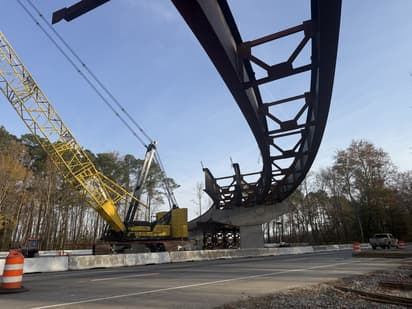
High Structural Erectors erected the structural steel on the I-95 crossing of the Christina River in Wilmington, Delaware, girder erection over water on one of the busiest interstate corridors in the Northeast.
Setting girders over a navigable river changes the whole approach. Access, river traffic and tide, and a crane that cannot simply reposition all have to be resolved in the erection plan before the first pick, and the plan has to survive a delivery arriving late or a lift that does not go as drawn.
The corridor above it decides the schedule. I-95 through Wilmington carries the length of the Eastern Seaboard through a single urban mile, so the work is written into overnight windows and short stage changes rather than long closures.
Watch our crews set steel on this project in the video at the top of our Projects page.
NYSDOT Red Flag Emergency Girder Repair
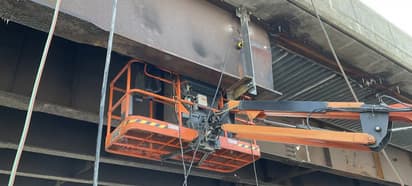
After significant impact damage to a steel girder on a NYSDOT bridge in Westchester County, New York, High Structural Erectors provided heat-straightening supervision and steel repair as part of an emergency Red Flag response with Harrison & Burrowes Bridge Constructors.
A Red Flag is NYSDOT’s designation for a structural condition serious enough that the owner is notified immediately and has to act on it, not something that waits for the next capital cycle. It usually puts the owner in front of a single choice: replace the member, or restore it.
HSE’s work included controlled heat straightening of the damaged member, structural restraint, steel repairs, and inspection and testing. The girder was restored without a full member replacement, and the structure returned to service with minimal disruption to traffic.
That is the argument for heat straightening in one project. Replacing an impact-damaged girder means new steel, new shop drawings, fabrication lead time and a far larger traffic impact. Straightening it in place, under a repair procedure the owner’s engineer approves, gives the owner the bridge back in a fraction of the time, and HSE carries both the engineering and the field crews to do it.
Our guide to heat straightening for bridge girder repair sets out the method, its temperature limits and the conditions under which it is not the right repair.